

For thousands of years, Edmonton has been home to Indigenous peoples. However, the city as we know it today began developing only in the 1800s, which also marked the beginning of its architectural evolution. This article explores how Edmonton’s architectural landscape has transformed over time. Read more on edmonton-future.
How Edmonton Was Built
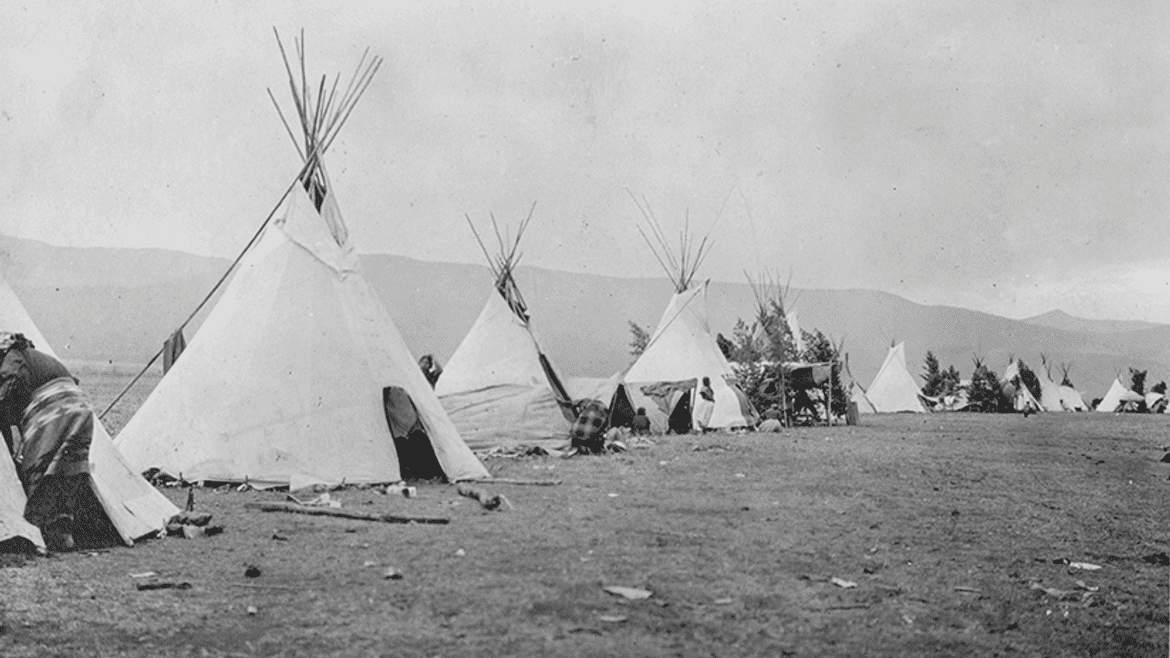
For generations, Indigenous peoples gathered along the banks of the North Saskatchewan River to trade and take part in various ceremonies. This region was an integral part of Canada’s trading network, where not only goods but also knowledge and construction techniques were exchanged.
Since travel was a central part of life, homes were temporary and transportable. Indigenous builders used natural materials such as buffalo hides and wood, adapting their dwellings to changing weather conditions.
In May 1870, the settlement began expanding. The first completed structure in the city was a Methodist church, built in 1871. By 1877, a treaty had been signed that officially transformed Edmonton into a town. The city began to spread northward from the river towards the railway line.
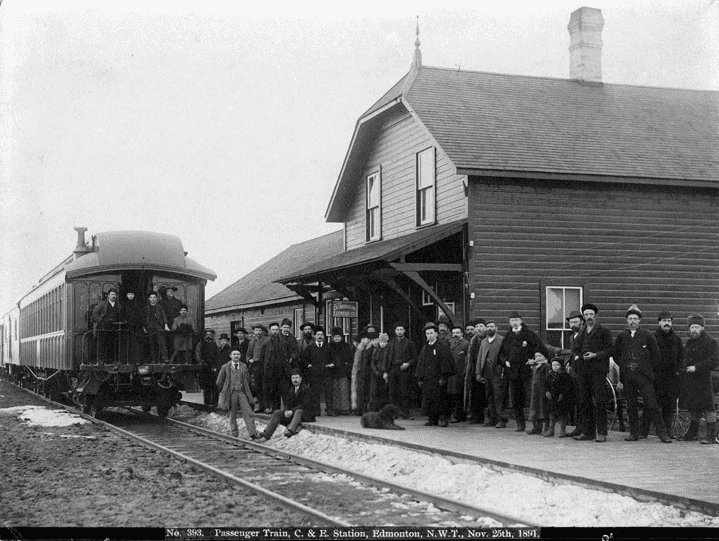
Wood remained the primary building material due to its availability. Gradually, brick structures began to appear, including the two-story Hudson’s Bay Company store. The most common type of home was a small, square-shaped house. Some affluent residents brought architectural plans for elegant homes in the French style.
Urban Expansion in the Early 20th Century
In 1905, Edmonton experienced rapid urban expansion. The city’s population surged from 10,000 to 70,000, driven by its designation as the capital of the newly established province of Alberta and the founding of the University of Alberta.
Immigrants brought expertise in concrete and steel construction, fueling an architectural boom that extended westward to the Hudson’s Bay Reserve. The city reached its peak prosperity in 1912 when Edmonton merged with Strathcona and expanded southward. In 1913, major projects were completed, including the Alberta Legislature Building, Robertson Presbyterian Church, and several high-level bridges.
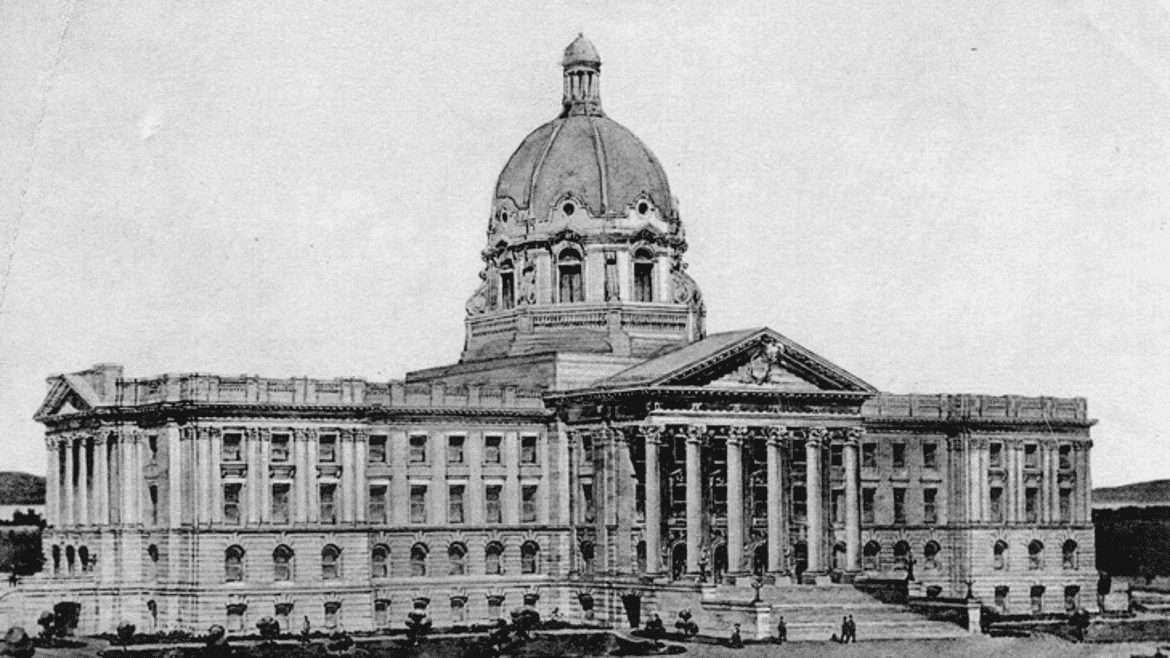
Significant investments allowed architects to experiment with ornate decorations. English architectural styles, including Edwardian and Tudor styles, became popular. American influences, characterized by a more functional approach, were also evident, along with several French-style structures.
In 1909, the city government established a regulatory body to oversee construction quality and enforce building standards. As a result, structures became safer and more durable.
This period also saw the construction of Canada’s railway hotels, including Edmonton’s Fairmont Macdonald Hotel, which resembles a grand fairytale castle. The development of the railway system introduced Victorian architecture and grand buildings adorned with intricate details, symbolizing prosperity.
Edmonton’s Architecture During the 20th Century Wars
Between 1914 and 1945, Edmonton underwent dramatic changes due to the Great Depression and both World Wars. In addition to these historical events, the city faced a natural disaster when the North Saskatchewan River rose by 12 meters, flooding entire neighborhoods and leaving 800 families homeless while devastating local businesses.
The 1920s saw slow growth as soldiers returned home. In the 1940s, a housing shortage led to the conversion of houses into apartments. The government provided free short-term housing for rural settlers. The demand for practical, cost-effective housing led to the adoption of modernist architectural principles, prioritizing function over decoration.
One of the most notable architectural milestones of the era was the Al-Rashid Mosque, built in 1938. Designed by Ukrainian and Canadian architects, the mosque remains an important landmark for Edmonton’s Muslim community.
Post-War Architecture
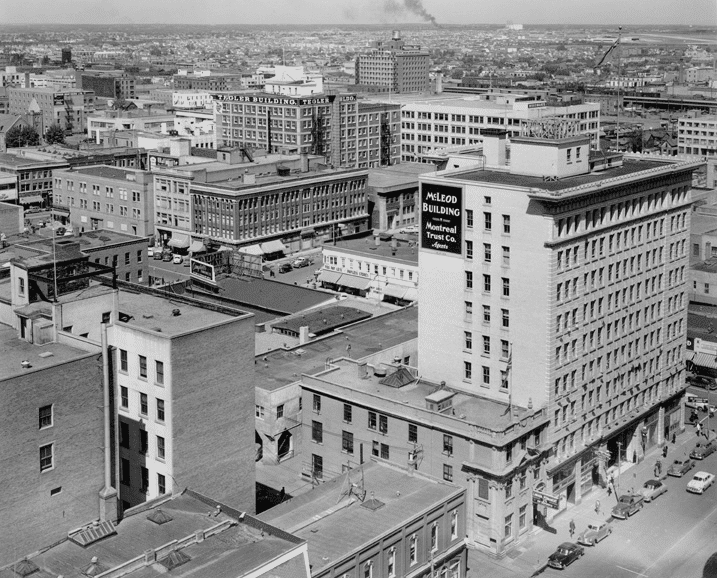
Following World War II, Edmonton entered a new phase of architectural growth. Veterans returning home received various forms of government assistance, including housing support. The city’s booming economy, fueled by the discovery of oil reserves, further accelerated its expansion.
In 1946, the government launched programs to help veterans purchase homes with low-interest mortgages. Demand for housing outpaced supply, leading to rapid urban development. The rise of car culture also influenced residential architecture, with attached garages becoming a common feature of new homes.
During the 1960s and 1970s, Edmonton’s architecture flourished, mirroring the city’s growing prosperity. To meet the demand for skilled workers, the Northern Alberta Institute of Technology (NAIT) was established in 1960.
Several major projects shaped the city’s skyline, including:
- The first urban planner in 1949, who directed Edmonton’s expansion.
- The first shopping mall in Canada, Westmount Mall, opened in 1955.
- The Edmonton International Airport, built in 1960 at a cost of $25 million.
- The city’s first skyscraper, the 27-story CN Tower, completed in 1966.
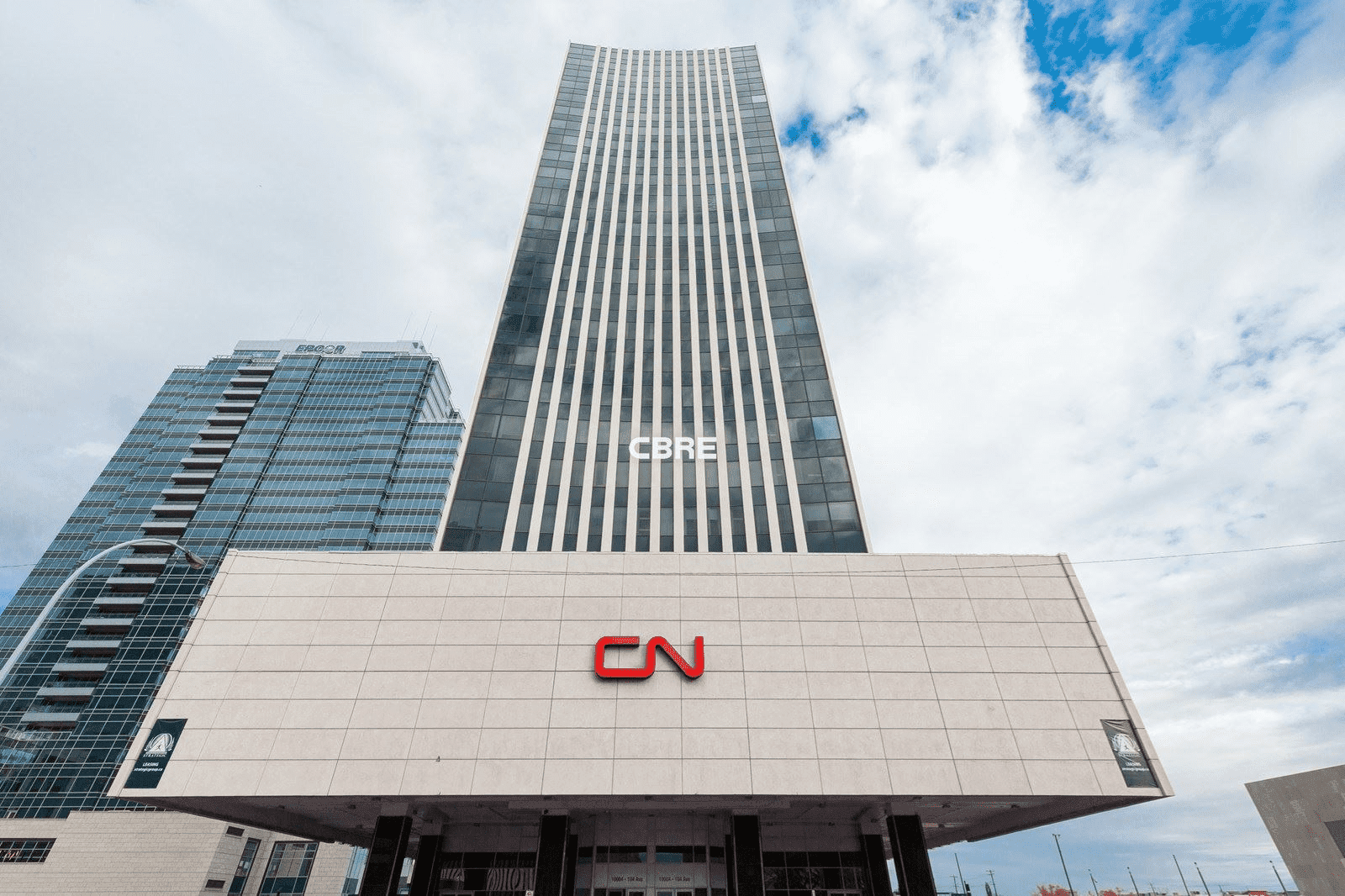
This era saw the rise of modernism, characterized by clean lines and open spaces. A key landmark from this period is Edmonton’s City Hall.
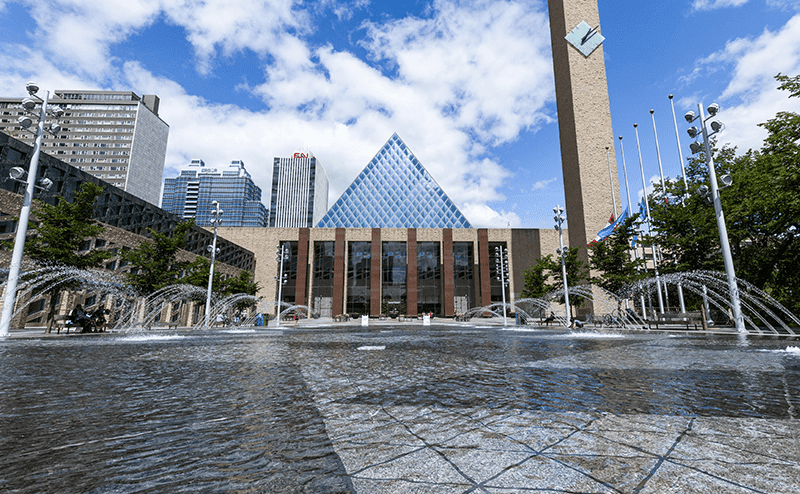
Edmonton’s City Hall, built in the shape of a pyramid, sparked debate among residents. The original design featured four conical structures meant to resemble Indigenous tipis, but citizens felt they looked more like hats or nuclear reactors. The design was altered, replacing the cones with pyramids inspired by the Rocky Mountains. The building also features a 60-meter clock tower and a fountain that transforms into an ice rink in winter.
Modern Architecture in Edmonton
In the 21st century, Edmonton’s architects have embraced contemporary trends focused on sustainability, energy efficiency, environmental conservation, and inclusivity. New buildings are designed to harmonize with the city’s natural surroundings, incorporating green technologies and innovative designs. Today, construction in Edmonton follows various international environmental protection programs.
The city’s architectural evolution reflects its residents’ resilience, adaptability, and respect for cultural heritage. Edmonton’s skyline preserves traces of different eras—from Indigenous influences to elegant European styles, from functional modernism to cutting-edge contemporary architecture. As the city continues to evolve, its architecture embodies the values and aspirations of its people.