

The Archibald Block was once one of the most stunning buildings in Strathcona, housing pharmacists, tailors, and jewelers. Remarkably, it has remained intact to this day. Let’s delve into its history and architectural significance on edmonton-future.
Who Was Seymour Archibald?
In 1898, Nova Scotia native Seymour Archibald arrived in the North-West Territories. Before that, he had studied at the Halifax Academy, Dalhousie University, and the Bellevue Medical College in New York. At 23, after completing his education, he moved to Strathcona in search of better opportunities. At that time, there were only nine doctors in the area.
While practicing medicine in Edmonton, Archibald also studied railway safety, possibly influenced by a traumatic incident he witnessed after his relocation. He saw a locomotive worker lose his leg in an accident. Whatever the reason, he devoted his life to this field. In 1899, he joined the Canadian Pacific Railway as a district physician.
A Real Estate Magnate and the Construction of the Archibald Block
Archibald soon became a real estate mogul, acquiring properties across Edmonton. By 1909, he had purchased land at the intersection of First Street West and Whyte Avenue West, just a block from Strathcona’s fertile lands.
One of Archibald’s properties caught the attention of the Dominion government, which offered him a substantial sum for it. He accepted the offer, and by spring 1909, officials announced that the Southside Post Office would be built on that site. With nearly a quarter of a million dollars from the deal, Archibald decided to construct his own building, beginning in the summer of 1909.
At the turn of the 20th century, fire was a constant threat in small towns, where most structures were made of wood. Fear of devastating fires led the Strathcona City Council to amend its 1902 construction code in 1907, mandating that new buildings on Whyte Avenue be made entirely of brick.
The Archibald Block was a prime example of this new regulation. Any potential flaws in its design were scrutinized. The “Edmonton Journal” reported that Alderman Donnan debated whether the building’s brick cornices violated fire safety laws. The city engineer ruled that they did not, as cornices were not walls, thus resolving the issue.
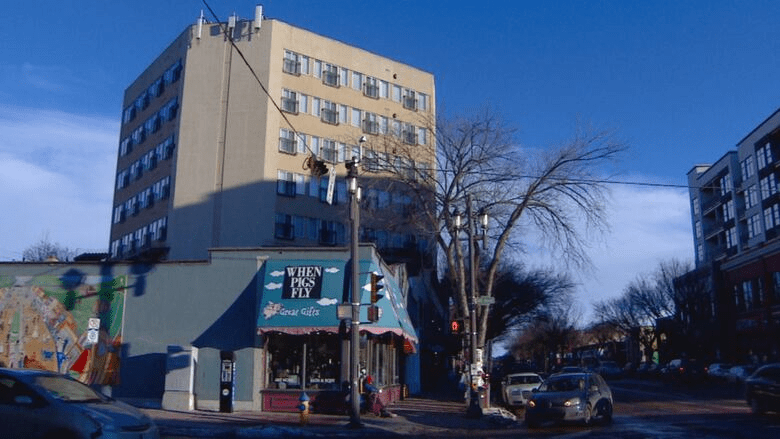
Architecturally, the Archibald Block represents Strathcona’s early history. Its vernacular design exemplifies a rare transitional style—its scale resembles early one-story “Boomtown” architecture, yet its masonry foreshadows the multi-story, avant-garde commercial architecture of the pre-war boom.
The Assad-Morie Brothers: Tenants of the Archibald Block
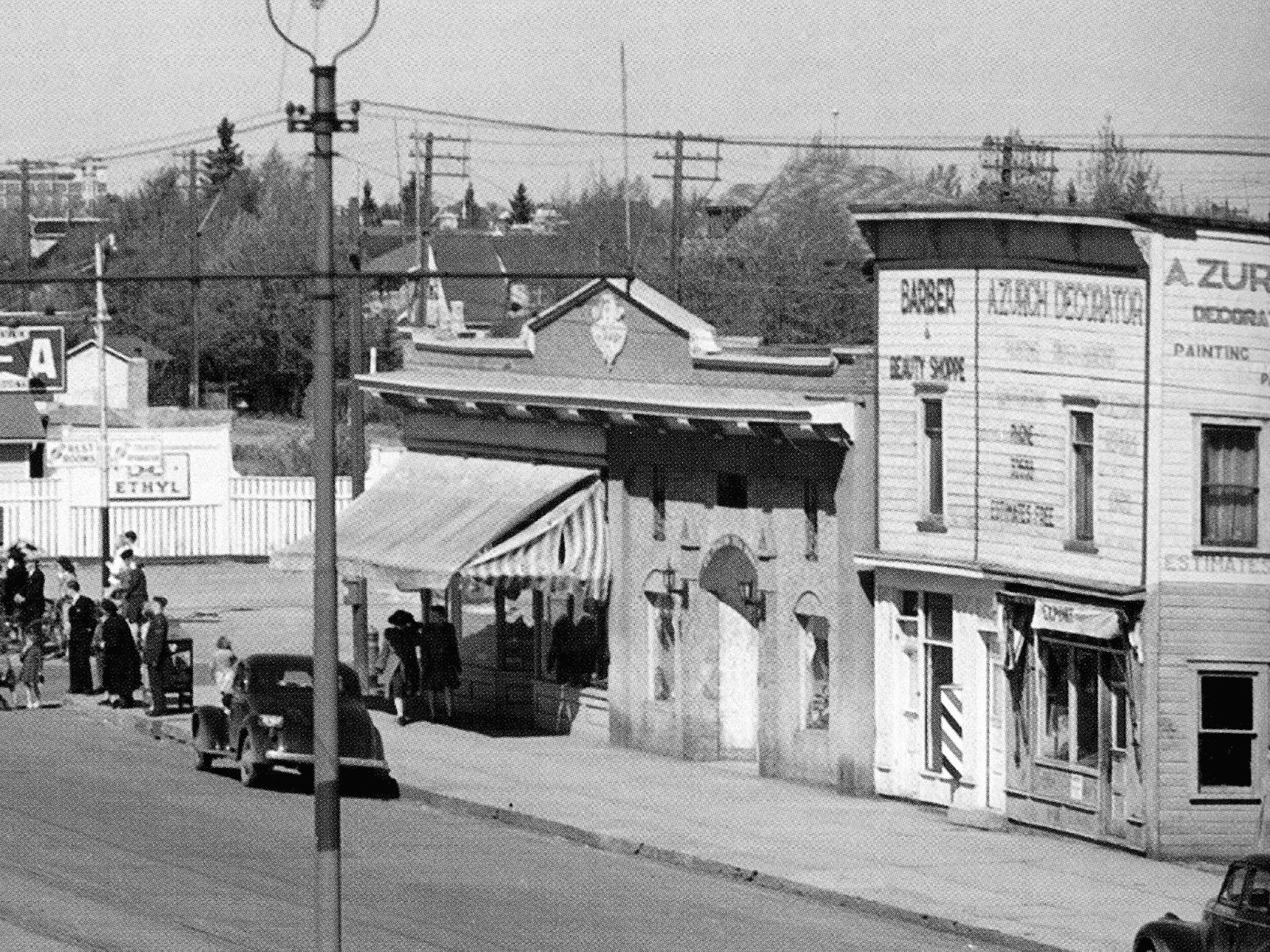
By September 1909, construction was complete at a cost of $13,000. The building was considered beautiful by local publications. Initially, its primary tenants were pharmacists, fabric merchants, and jewelers.
In 1912, the Archibald Block gained significant popularity when Morie & Company, a wholesale distributor of confectionery and fresh fruit, moved in. Founded by immigrant brothers John and Fred Assad-Morie, they were soon dubbed “the fruit kings.” Their store offered a wide variety of products, and they organized summer street fairs throughout Edmonton.
The Assad-Morie Company operated in the Archibald Block for over eight years. During World War I, Fred served overseas while John managed the business. In 1922, they sold their enterprise and moved north to establish a small trading post in Fort Smith. Eventually, they returned to Edmonton. Fred retired from the family business in 1939, and John followed in 1950.
Fred was a passionate activist and community advocate. Thanks to his efforts, a former landfill along Saskatchewan Drive was transformed into a picturesque park with lush greenery. In recognition of his contributions, the city named the area after him in 1965. Official records state that the Archibald Block played a key role in fostering Alberta’s Arab business community. The Assad-Morie brothers’ legacy remains a vital part of Alberta’s history, and the Archibald Block stands as a testament to the immigrant trading community’s impact on the province.
Seymour Archibald, in contrast, led a less prosperous life. He spent most of his career as chief physician for the Northern Alberta railways, served as a distinguished World War I veteran, and was vice president of the Alberta Medical Association. He passed away on March 5, 1939.
A Legendary Block Facing the Risk of Demolition
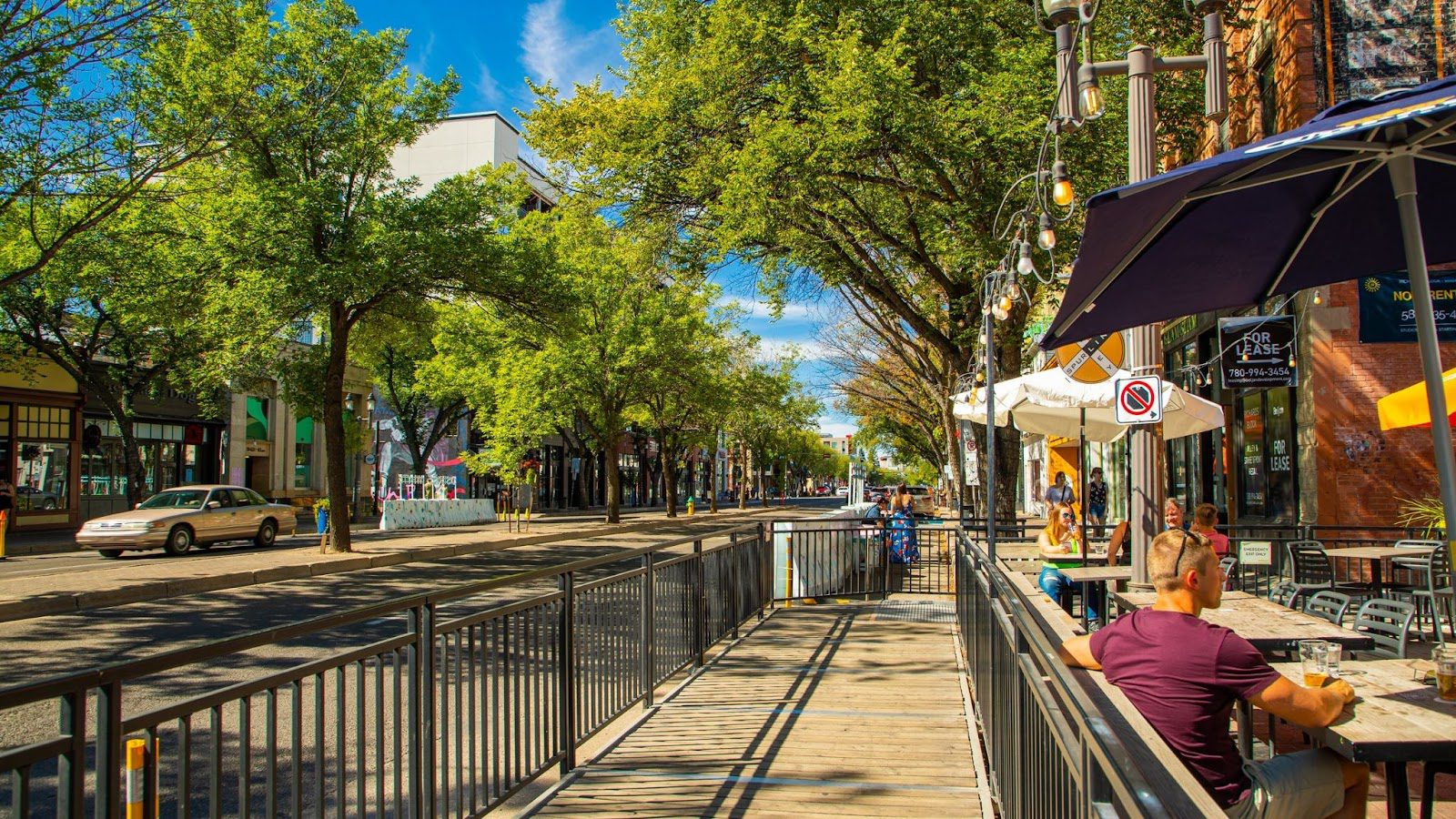
In 2020, 81 years had passed since Archibald’s death and 111 years since he built his small commercial block. Strathcona is no longer an independent town but part of Edmonton. Church spires are no longer the tallest structures; instead, hotels and condominiums rise dozens of stories high. Whyte Avenue is no longer the city’s main thoroughfare but a bustling commercial strip. The Archibald Block, once on the western edge of Strathcona’s business district, is now at its very heart.
Over the years, the neighborhood has changed dramatically, leading to discussions about the future of the Archibald Block. Calgary-based Wexford Developments proposed demolishing the old building to construct a nine-story mixed-use tower called The Baron. Notably, this would have been Alberta’s first mass timber building, replacing concrete with laminated wooden beams and columns. This sustainable construction method is considered one of the world’s most environmentally friendly. The company claimed that over its lifespan, the new building would offset emissions equivalent to removing over two million cars from the road for a year. It was pitched as a step toward sustainable urban development and a glimpse into Canada’s architectural future.
Everything seemed set for construction, but one major obstacle arose—the Archibald Block sits in the heart of a provincial historic district valued for showcasing Alberta’s early commercial and social development. The Archibald Block is also significant due to its location on Whyte Avenue, known not only for its rich history but also for its vibrant businesses. Today, the building houses the popular gift shop When Pigs Fly, which attracts both locals and tourists.
While the future of the Archibald Block remains uncertain, its historical significance and connection to Edmonton’s past continue to make it an integral part of the city’s architectural landscape.