

The Art Gallery of Alberta is a captivating hub for visual arts in Edmonton, housed in a building that is nothing short of an architectural masterpiece. The structure itself is designed to reflect the mesmerizing Northern Lights and the winding North Saskatchewan River. In this article, we delve into the history and architectural significance of this museum. Read more on edmonton-future.
The Architecture of the Gallery
The gallery’s space invites visitors to engage with art on multiple levels, both inside and outside the building. The structure is more than just a museum—it is a standalone work of art that enhances the existing exhibitions while contributing to the cultural district surrounding Churchill Square.
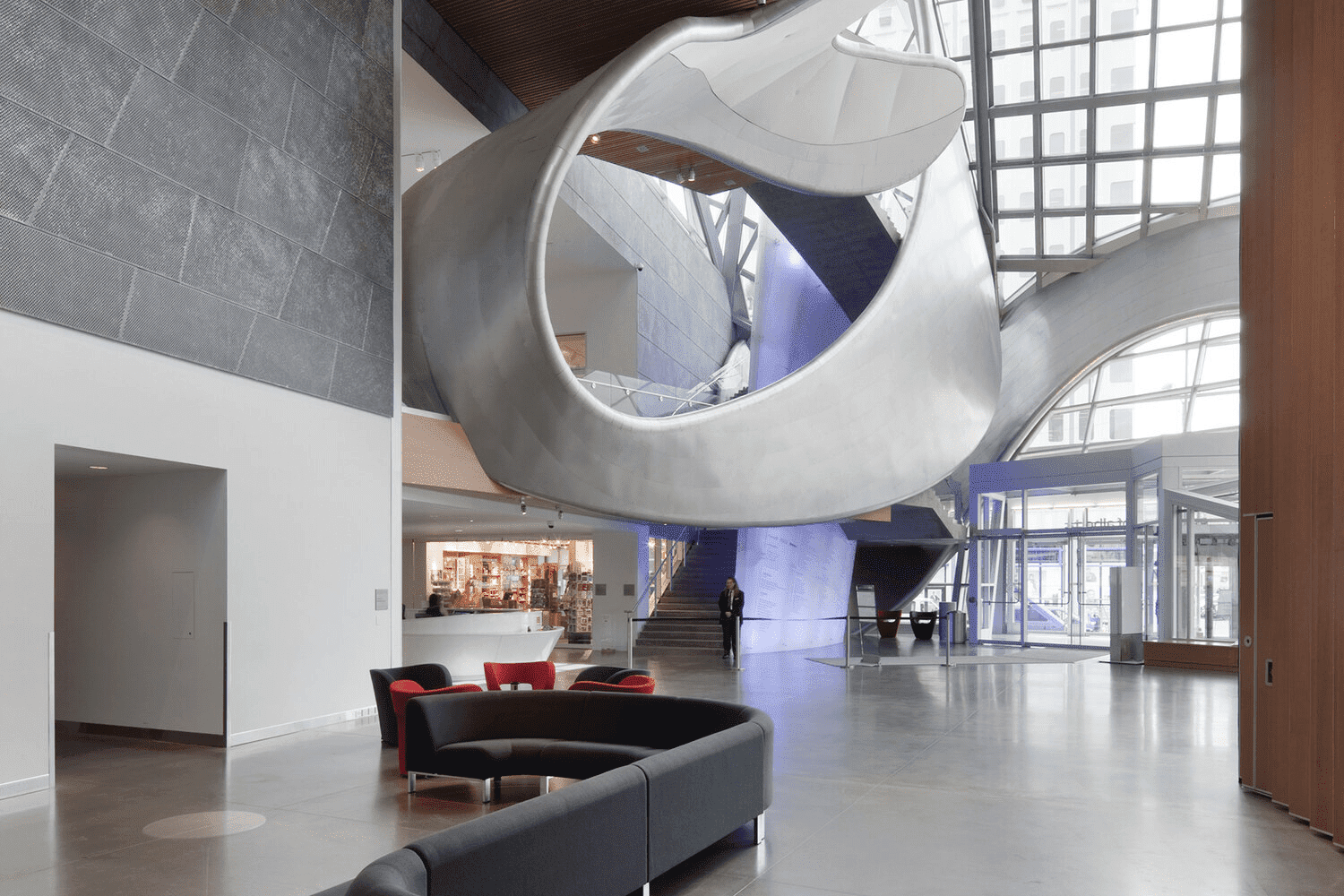
The building was designed by architect Randall Stout in collaboration with local architect Allan Partridge, who drew inspiration from Edmonton’s urban landscape. Covering an area of 7,900 square metres, the Art Gallery of Alberta ranks as a world-class gallery. It consists of three floors of exhibition spaces, a centre for art education, an art sales gallery, a 150-seat theatre, unique rental spaces, and more.
The building features a vertical architectural design that distinctly separates different sections of the gallery, including spaces for art, dining, staff, and visitors. Modern museum elevators, registration areas, and a dedicated wing for educational projects enhance the functionality of the space.
The gallery’s striking composition embodies regional themes, particularly the undulating forms of the North Saskatchewan River and the Northern Lights. Architect Randall Stout describes the design as a dialogue with the community. Previous architectural approaches focused on neutral exhibition spaces, but Stout sought to challenge this notion. His design makes the building itself a significant piece in the gallery’s collection.
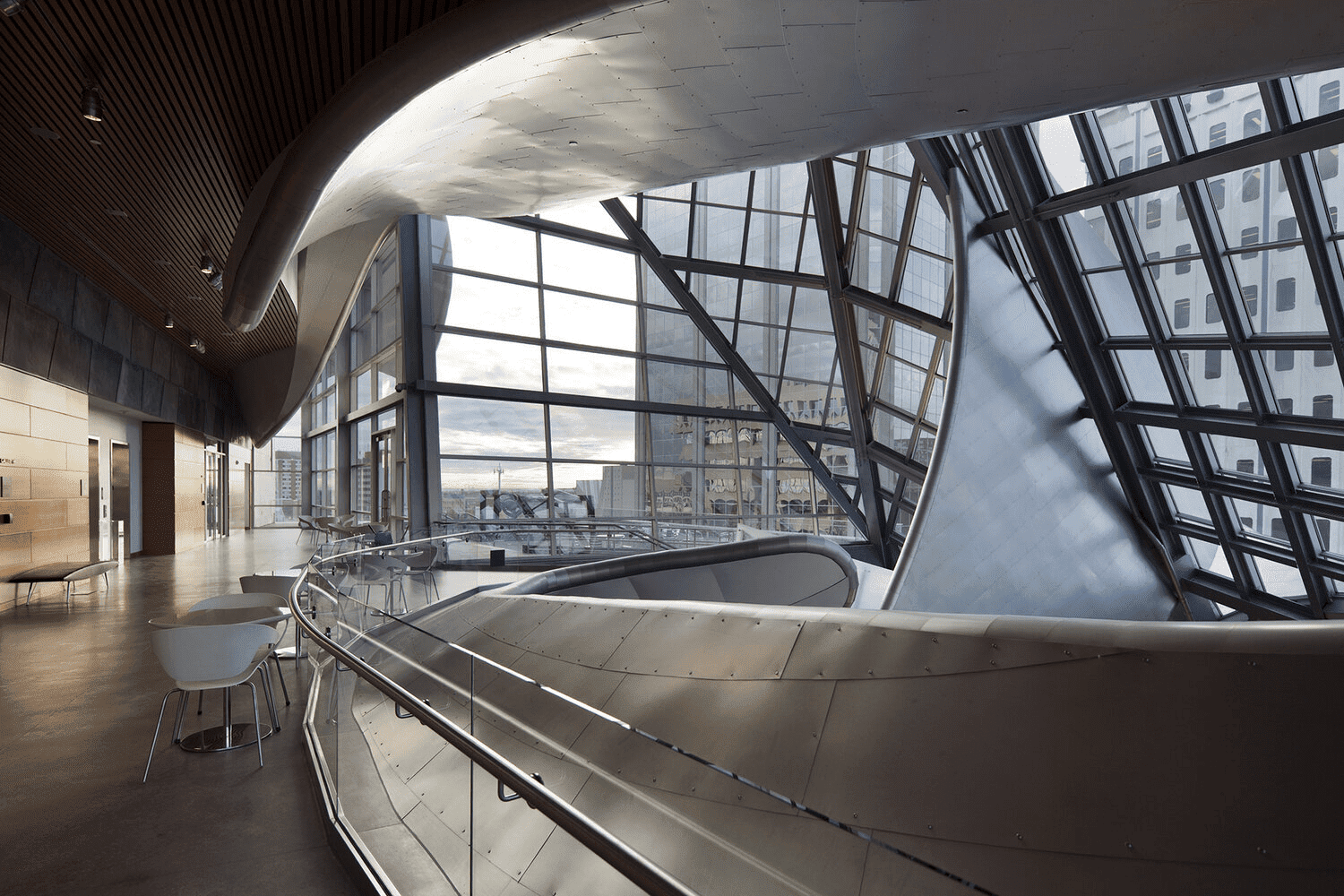
Notably, this was the first North American building modelling project executed by remote teams. Teams from Edmonton, Los Angeles, San Francisco, New York, and Kansas City collaborated on the design at a time when remote work was still a significant challenge. While the process was complex, it paved the way for future remote architectural collaborations.
The firm Randall Stout Architects received international recognition for this project. Architects worldwide admire this structure, as it stands in stark contrast to conventional buildings of the past. For many, seeing this architectural marvel is akin to witnessing the Northern Lights dancing across the sky for the first time.
About Architect Randall Stout
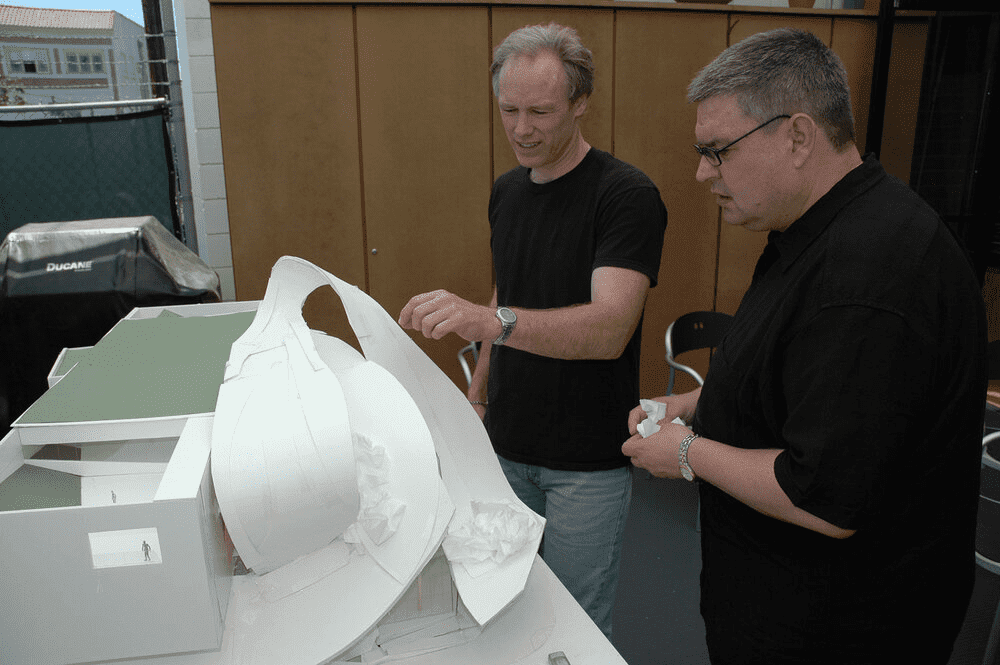
Randall Stout was a visionary who boldly challenged architectural conventions. He earned a Master’s degree in Architecture and spent over seven years working as a designer and senior associate under renowned architect Frank Gehry.
Over time, Stout developed a unique approach to design, transforming light, shadow, form, and materials into dynamic architectural expressions. He led various projects worldwide, designing significant museum, civic, educational, and residential buildings. His structures are known for their dynamic forms, cutting-edge technology, and sustainable design. Stout was accredited under the Leadership in Energy and Environmental Design (LEED) program and frequently lectured on the topic of sustainable architecture.
Sadly, Randall Stout passed away in 2014 after a long battle with cancer. However, his architectural legacy continues to inspire through his remarkable projects.
More About the Gallery and Its Collection
The Art Gallery of Alberta is essentially an art museum with a history dating back to 1924. Its first exhibition featured 24 works from the National Gallery of Canada and was held at the Macdonald Hotel. Over the years, the gallery changed locations multiple times. In 1952, it moved to the Richard Second House, an elegant mansion overlooking the North Saskatchewan River. In 1956, it was renamed the Edmonton Art Gallery, and in 2005, it officially became the Art Gallery of Alberta. Although a dedicated gallery building was constructed in 1969, it eventually proved inadequate to meet growing demands.
The museum’s permanent collection comprises over 6,000 works, most of which were created after the 1950s. Many of these works were acquired through generous patrons. The collection focuses on art from Alberta and Western Canada. While it began growing after the first exhibition in 1924, expansion slowed significantly during the Great Depression and World War II.
Between the 1960s and 1985, the collection expanded with numerous contemporary art pieces. As of 2015, it was valued at approximately 30 million Canadian dollars. In 2017, the museum received a $375,000 grant to acquire works by contemporary artists representing Canada’s Indigenous communities.
The museum’s collection features works by renowned artists such as Jack Bush, Emily Carr, Pegi Nicol, Carl Schaefer, Lilias Newton, Douglas Haynes, Chris Cran, Amy Malbeuf, Liz Magor, and others.
Additionally, the museum holds an extensive photography collection with over 1,500 images, including works by Edward Curtis, Walker Evans, Yousuf Karsh, and Lynne Cohen.
The Art Gallery of Alberta is affiliated with the Alberta Museums Association, the Canadian Museums Association, the Canadian Heritage Information Network, and the Virtual Museum of Canada.