

The official formation of the Jewish community in Edmonton dates back to 1906 — that’s when the Edmonton Jewish Organization was established, playing a key role in the community’s early development. By May 26, 1907, Abraham Cristall, one of the city’s first Jewish settlers, purchased land on the south bank of the North Saskatchewan River to establish a Jewish cemetery. The site at 7622–101 Avenue still operates today as a crucial historical and religious landmark for the city’s Jewish community, preserving the region’s cultural heritage, reports edmonton-future.com.
The History of the Jewish Cemetery
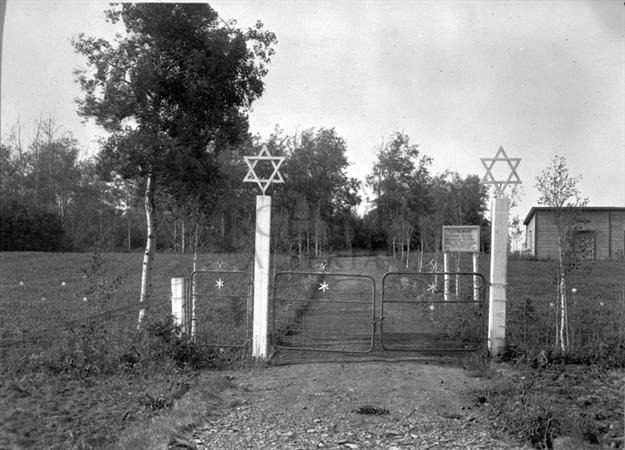
Back then, the site was located just a short distance from the heart of the Jewish community on 95th Street in East Edmonton. Getting to the cemetery was quite a trek: mourners had to head down Dawson Hill, cross the road, and climb another steep hill to reach the grounds. During the harsh winters, horse-drawn hearses relied on wooden logs as makeshift brakes, though summer conditions made the journey much smoother. By the 1930s, motorized hearses were introduced and put into use.
The first modern, community-wide burial society was established in Prague by Rabbi Eliezer Ashkenazi in 1564. Its rules and regulations were later codified by the Maharal, setting the gold standard for all subsequent Jewish burial societies. The functions of the Chevra Kadisha (burial society) are rooted in two core Jewish principles. First, the deceased must be treated with the utmost respect because their body housed the soul during life; second, no one is allowed to profit from burying the dead. As a result, the Chevra Kadisha operates strictly as a charitable organization, unlike most non-Jewish burial societies or commercial funeral homes.
Unique Burial Traditions
The founding members of Edmonton’s men’s Chevra Kadisha were selected from the founders of the Beth Israel Synagogue in 1907. The society was officially registered in 1925. The women’s branch began informally in 1914 before being officially chartered in 1919. The founding members of the women’s organization at the time included in Edmonton:
- Mrs. H.B. Kline
- Tzoril Cristall
- Debra Cohen
- Hoda Rodnunsky
- Hinda Baltzan
The tradition was strict but profoundly respectful: men prepared men for burial, and women prepared women. They also hand-sewed the tachrichim — the traditional shrouds used to dress the deceased. The names of the 92 active Chevra Kadisha members who served between 1907 and 1935 can still be found proudly displayed on the walls of the cemetery’s chapel. Modeled after the garments worn by the High Priest in the Temple on Yom Kippur, the tachrichim had to be pure white, made entirely of linen, and hand-sewn without any knots so they could naturally decompose. They were crafted without decorations or pockets, symbolizing that worldly possessions cannot be taken into the afterlife. Everyone — rich or poor, young or old — was buried in the exact same attire. This deep-seated principle of equality also applied to the caskets, which were constructed entirely of wood and assembled without a single nail.
Chapels, Memorials, and Jewish Architectural Symbolism
In the early days, co-founder Jacob Baltzan struck a deal with J.W. Connelly, owner of the local Connelly-McKinley funeral home, to assist with Jewish funerals by providing hearses and passenger cars, as well as handling the necessary paperwork. Remarkably, this partnership continues to this day. The cemetery’s distinctive fence and gates were designed and crafted by Leib Agranov. He adorned the ironwork with beautiful motifs of fruits, birds, and flowers that visitors can still admire.
Originally, the cemetery grounds featured nothing more than a small wooden shed for shelter. Between 1930 and 1935, the community successfully raised enough funds to build a permanent chapel, which hosted services for many years. However, Edmonton’s Jewish population quickly outgrew the space. In 1963, the much larger Chesed Shel Emes chapel was constructed at 12313-105 Ave, complete with dedicated facilities for preparing taharot and sewing the shrouds. The smaller, original chapel underwent extensive renovations in the mid-1990s and is now frequently used for services once again.
The cemetery is also home to several other unique architectural elements. Around 1974, a cenotaph was erected, bearing the engraved names of Jewish soldiers from the community who fell in World War II. In the mid-1970s, a Holocaust memorial was installed on the grounds, serving as the central gathering place for annual Yom HaShoah (Holocaust Remembrance Day) services. This tradition continued until sculptor Susan Owen Kagan created a new memorial, which was subsequently installed on the grounds of the Alberta Legislature. To help visitors locate their loved ones’ resting places, a detailed grave guide has been thoughtfully developed and placed on-site.
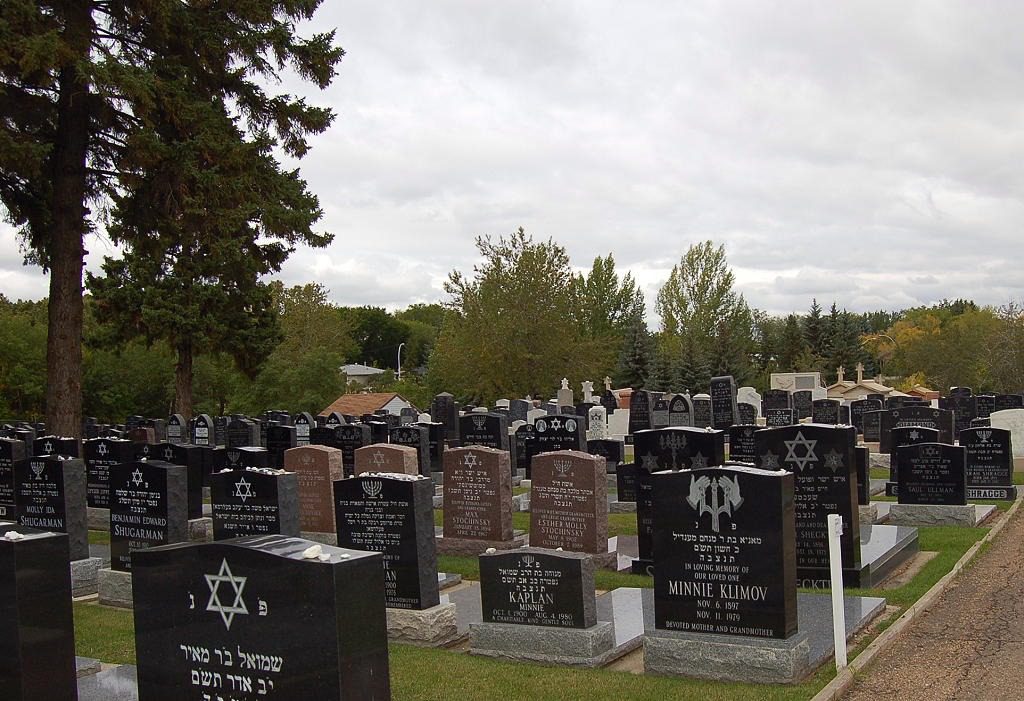
As for the headstones, they are crafted to exact standards, primarily by Edmonton Granite Memorials. An interesting quirk of Edmonton’s Jewish cemetery is its layout: unlike most Jewish cemeteries where graves face east, the plots here are oriented from north to south. While the exact reason for this remains unknown, it has become a deeply rooted historical tradition. Another unique feature is its broad inclusivity — the cemetery serves all denominations of the local community, accommodating Orthodox, Conservative, and Reform Jewish families alike.