

The second bridge across the Latta Ravine in Edmonton is a vital piece of urban infrastructure with a rich history. It is part of an extensive network of bridges connecting the city’s neighbourhoods across the North Saskatchewan River valley and adjacent ravines, playing a key role in Edmonton’s accessibility. Modern bridge structures combine engineering reliability and functionality, ensuring the smooth flow of vehicular and pedestrian traffic. Read more about the construction history, features, and significance of this bridge at edmonton-future.com.
How the First Latta Bridge Came to Be
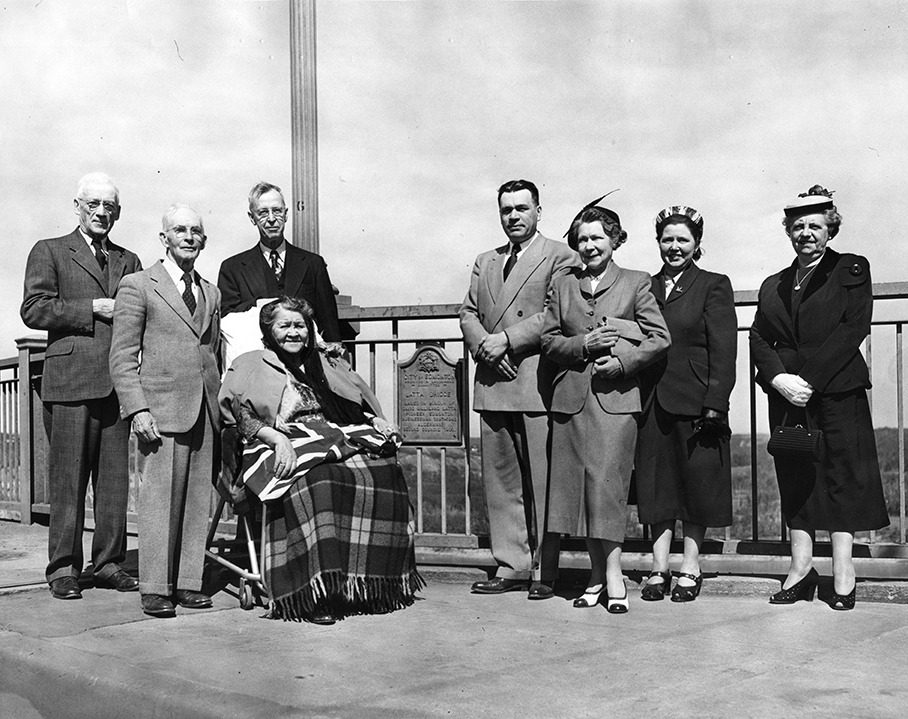
David G. Latta was a blacksmith, a former constable with the Royal North-West Mounted Police, a gold rush fortune seeker, and a city alderman. He built the first bridge over this unassuming ravine in 1911. His creation was quite primitive. Built from wooden beams with a modest span of about 21 feet and sitting slightly off-centre from Jasper Avenue, the structure creaked under pressure. But that was perfectly fine, as the bridge was always meant to be a temporary fix for horse-drawn carts. Ultimately, Latta’s makeshift creation managed to last for two decades.
The rise of the automobile, heavier vehicles, and increasing traffic took a heavy toll on the bridge in the following years. By 1929, roadway engineers declared the old Latta Bridge unsafe. However, a replacement wasn’t built right away; the onset of the Great Depression meant city officials simply couldn’t afford such a massive capital project. Some suggested filling in the ravine as a cheaper alternative, but that plan was quickly scrapped when old coal mine shafts were discovered directly beneath the bridge. As the Depression deepened year after year, the city had to continually downplay growing public fears about the bridge’s deteriorating state. Edmontonians weren’t buying it. Even the Edmonton Radial Railway (ERR) eventually refused to take chances, completely rerouting its streetcars to bypass the crossing and go around the small ravine.
Building the New Bridge
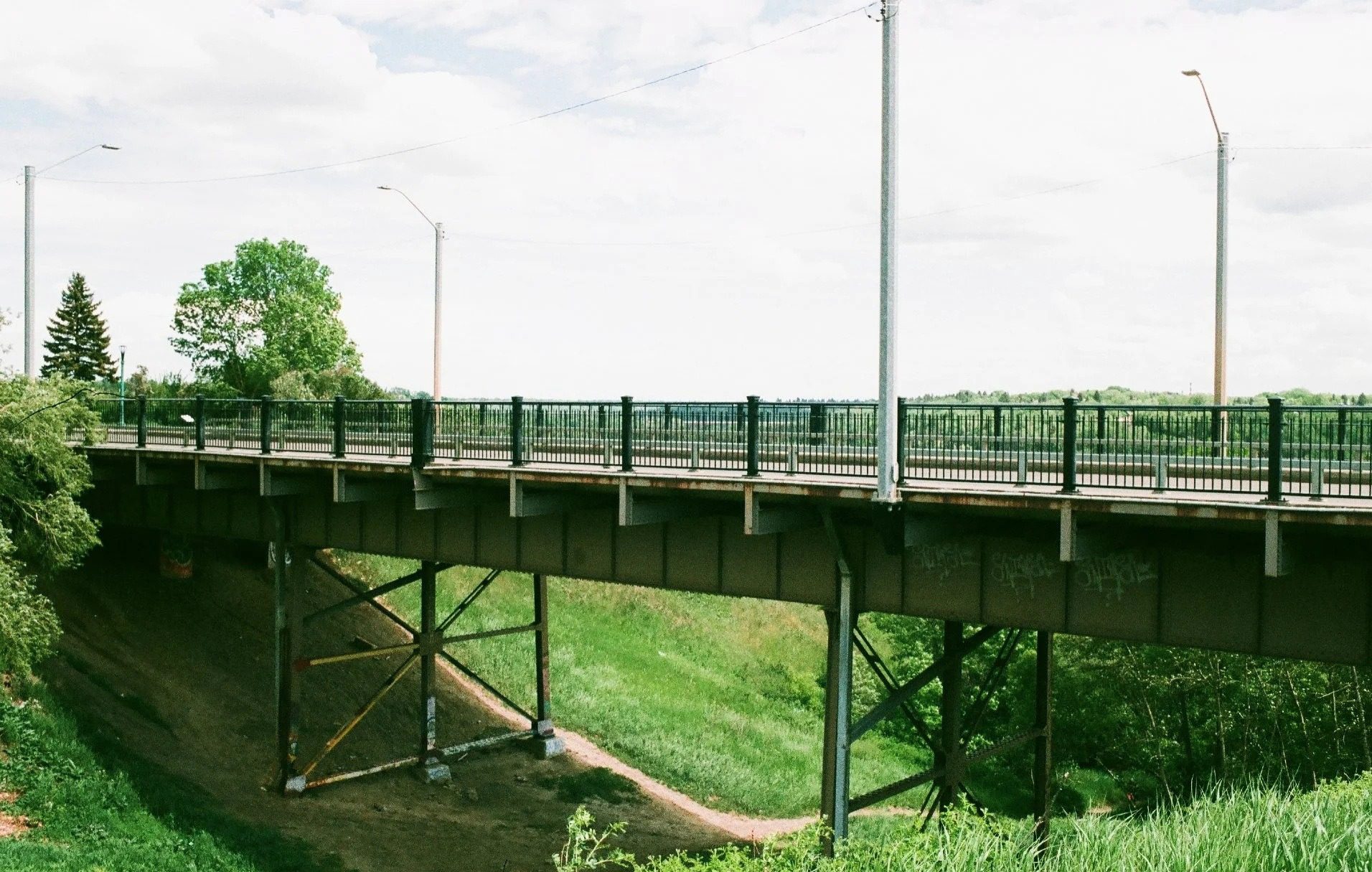
By late 1935, city council could no longer ignore the crumbling structure, yet the municipal budget still had zero dollars allocated for a replacement. City officials had to get creative. Typically, approving unbudgeted expenses and the loans to cover them required a public plebiscite, but council found a loophole. Under the law, the city could spend up to $100,000 a year on unemployment relief work at council’s discretion. In November of that year, they did exactly that, pitching the new bridge as a $44,000 job-creation project for Edmonton’s unemployed.
Historian Eric Strikwerda noted that city officials were well aware of the economic, political, and social perks of relief projects, which were heavily subsidized by the provincial and federal governments. In fact, many municipalities scrambled to pack as many of their own wish-list items as possible into these three-way job-creation agreements.
On December 5, 1935, the Board of Public Utilities Commissioners greenlit council’s plan. This meant the city could finally replace the old bridge without having to push a funding bylaw past reluctant voters. On December 9, city council officially rubber-stamped the project. A motion introduced by Alderman Hugh MacDonald authorized the work following a review of Section 8 of the commissioners’ report. It also directed staff to take the necessary legal steps to get a construction contract drafted for the Latta Ravine Bridge. By the end of 1935, all the details were ironed out.
On January 13, 1936, the city received two bids for the supply, fabrication, and erection of the new bridge’s steelwork. The Canadian Bridge Company and the Dominion Bridge Company went head-to-head. Dominion won the contract with a bid of $25,266.25, undercutting their rival by $2,015. Interestingly, neither bid included the cost of tearing down the old bridge.
Demolition finally began in March 1936. The Edmonton Journal reported on the old trestle splintering under the blows of sledgehammers and crowbars. By early April, the wooden structure was entirely gone, and crews began pouring the concrete foundations. Workers drove 108 twelve-inch pilings to a depth of 6 to 7 feet. Beneath each of the 12 footings sat nine, nine-foot-diameter holes extending 5 to 15 feet below ground level.
Historian Jane Gibson called the Latta Ravine Bridge an early champion of industrial recycling, thanks in part to the repurposed materials used in its construction. Steel beams originally fabricated for the 1931 High Level Bridge renovation—but never used—were dragged out of storage and hauled to the site by tractor. Similarly, the city brought in old streetcar rails it had hoarded during the Great Depression to use as reinforcement for the concrete supports.
Dominion Bridge Company hired unionized workers for the build. While the temporary relief workers were paid the federal rate for the Edmonton area—just 48 cents an hour, about half of what union foremen made—they kept the job moving. By May 20, the steel framework was finished. Riveting and painting were rushed to completion, while street grading, paving, and landscaping carried on into the following month. The city confidently set an opening date for June 20, 1936.
To celebrate the milestone, the Benevolent and Protective Order of Elks teamed up with the city to host an open-air night dance. They strung up coloured lights, flags, and bunting especially for the occasion. At 9:00 p.m. on Saturday, the Latta Bridge welcomed Edmontonians for the first time. Couples danced to rhythmic tunes while cars lined up along Jasper Avenue for blocks. Over two thousand people turned out for the party—and vehicle traffic flowed across the bridge once again early the next morning.
Reconstructing the Latta Bridge
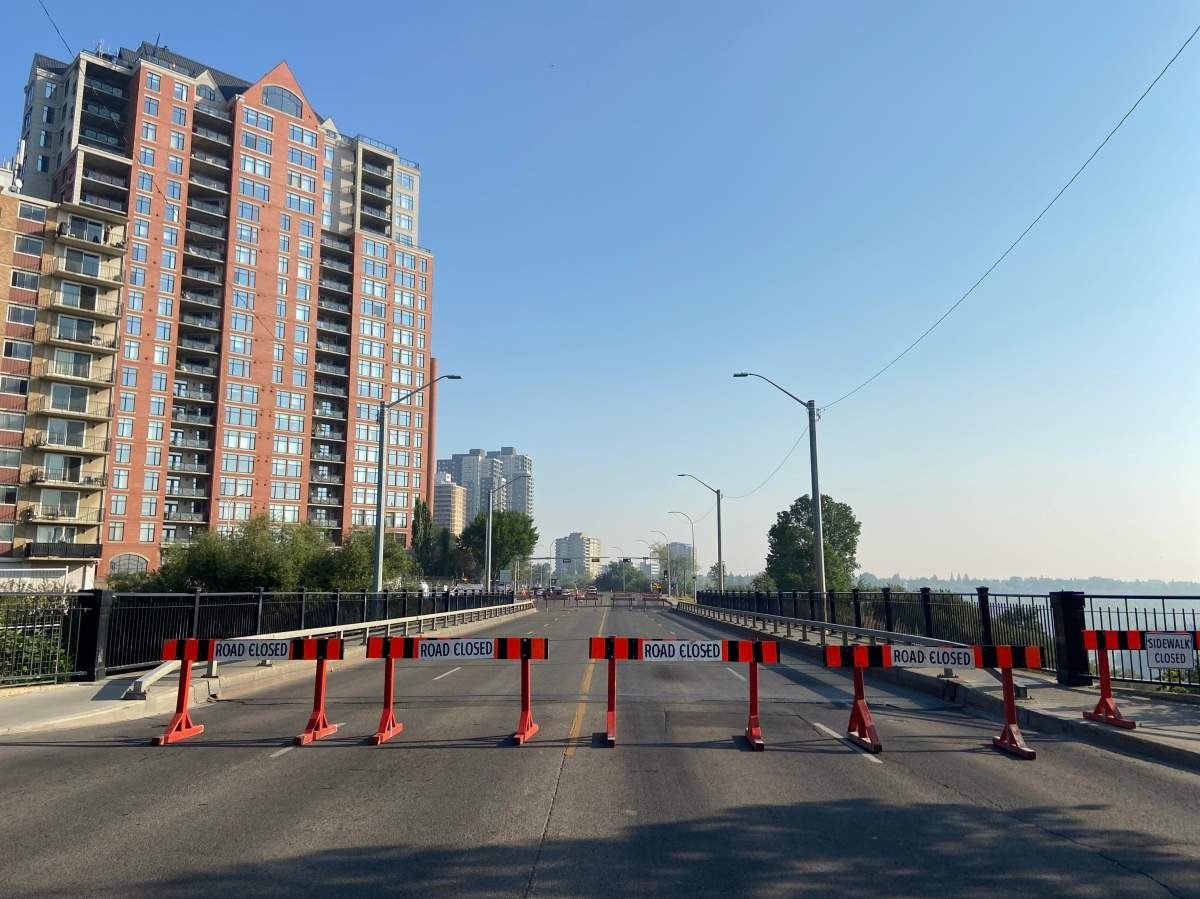
In 2022, the Latta Ravine Bridge was dismantled beam by beam to salvage the historic materials preserved nearly a century prior. On October 29, 2023, the replacement was completed on budget for $19.7 million. The new span is wider and fully meets modern municipal standards, featuring a shared-use path for pedestrians and cyclists. As part of the reconstruction:
- Street lighting was upgraded.
- The surrounding area was landscaped.
- Utilities were replaced.
It is worth noting that roughly 20,000 vehicles cross the new Latta Ravine Bridge every single day.
The story of the Latta Ravine Bridge in Edmonton is a perfect example of how the city adapted to economic hardship and booming transportation needs. Evolving from a simple wooden crossing for horse carts to a modern feat of engineering, the structure’s journey mirrors decades of shifts in technology, civic policy, and urban infrastructure. The 1930s rebuild was more than just a technical necessity; it was a Depression-era lifeline that put locals to work. Today, the newly reconstructed bridge stands as a crucial transit artery linking Edmonton’s neighbourhoods. It meets the highest modern standards for safety and comfort, cementing its legacy as an essential part of Edmonton’s growth.