

Since its early days, Edmonton has been home to numerous small shops and grand department stores, each with its own unique history and architectural charm. Among them, Hudson’s Bay Store stood out as one of the most beautiful and iconic landmarks. Many regarded it as an architectural marvel. Let’s explore its history, design, and transformation over the years. Read more on edmonton-future.
A Retail Giant in Downtown Edmonton
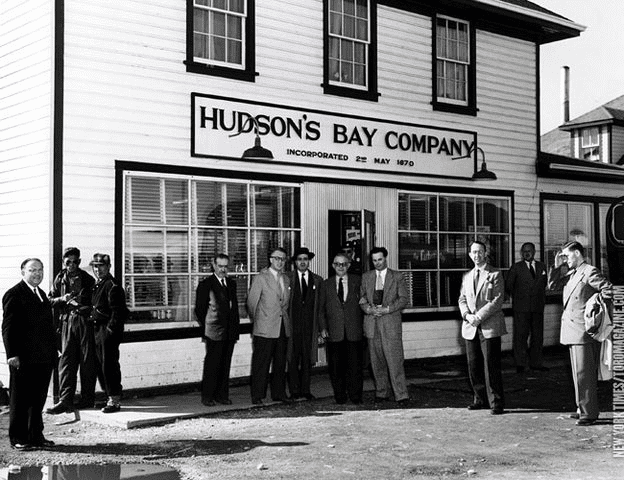
December 28, 1937, marked the end of the Great Depression for many Edmontonians. It was on this day that the Hudson’s Bay Company announced its plans to build a massive $1,000,000 store in the heart of the city. At the time, this was an enormous investment, symbolizing not only the company’s resurgence but also the city’s and nation’s economic revival.
The Hudson’s Bay retail division had been present in Edmonton since the city’s earliest days. As the small settlement evolved into a major city, the company’s presence grew with it. The store, located at the corner of Jasper Avenue and 103rd Street, became a staple for Edmontonians, offering them the finest goods. Over time, the company had to expand the store nine times to keep up with the city’s growing population. The result was a stunning architectural masterpiece.
Expansion and Architectural Excellence
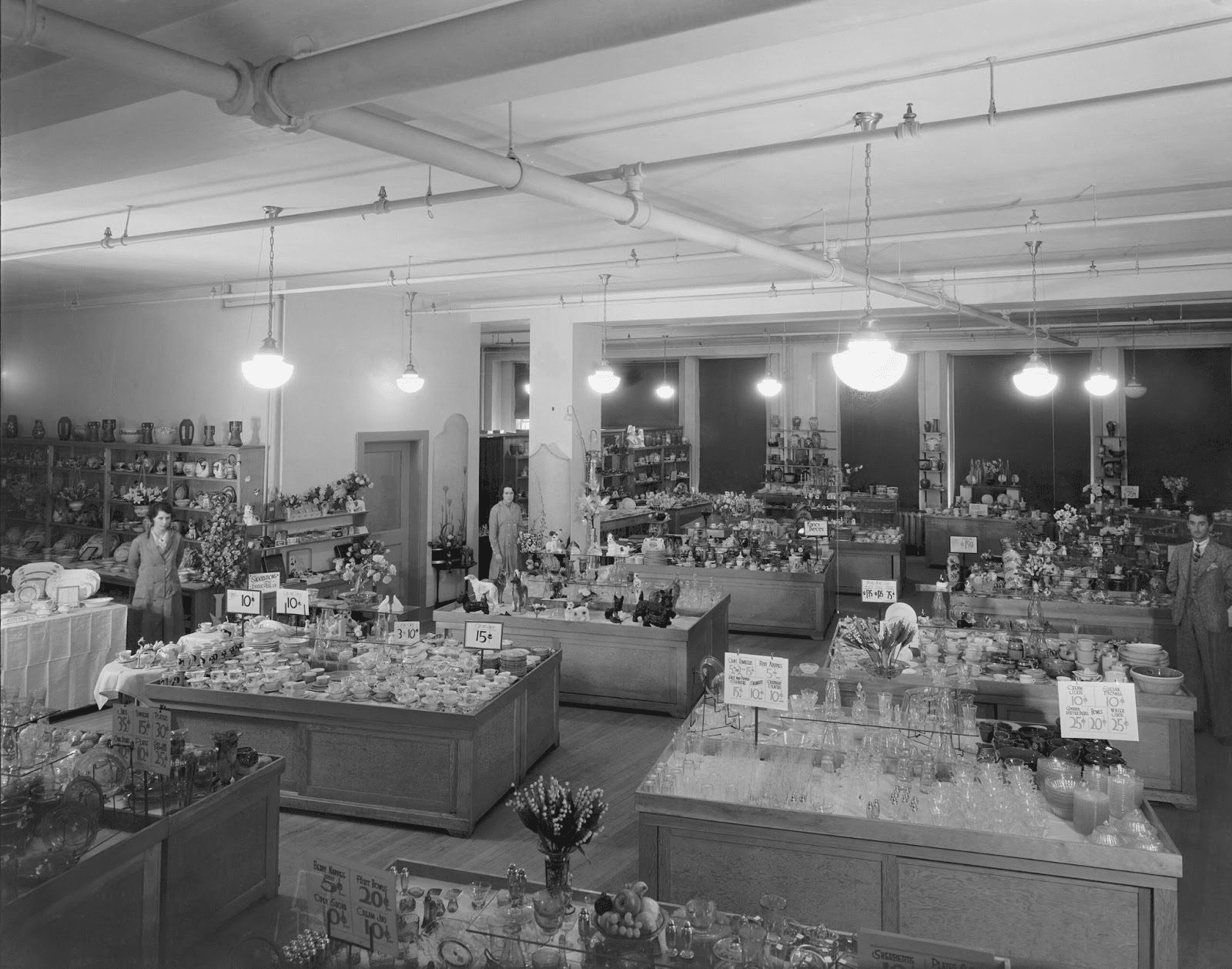
Construction of the new building began in the spring of 1938. To minimize disruption and financial losses, as well as to avoid inconveniencing customers, the owners decided to keep the old building operational throughout the process. To achieve this, the construction site was divided into three sections, with each part being demolished and rebuilt sequentially. Departments were relocated as necessary, and major construction work was carried out in the late afternoons and at night. By morning, the store was ready for business.
The construction proceeded smoothly, except for one significant challenge. The southwestern section of the building, dating back to 1905, contained approximately 2,000 tons of reinforced concrete. As a result, it had to be demolished using small amounts of explosives.
The grand opening of the new store took place on November 14, 1939. A staggering 20,000 people attended the event—an impressive number considering that it represented nearly one-fifth of the city’s population. The building, which had come to symbolize the end of a decade of hardship, boasted breathtaking architecture. Its sleek corners, flowing lines, stainless steel door and window frames, glass blocks hidden under canopies, as well as black Quebec granite and Manitoba stone, all reflected a futuristic optimism.
A unique feature of the building was its six hand-carved reliefs, depicting a York boat, a fur trader, and a settler—symbols of the western pioneer era in which Hudson’s Bay played a crucial role. Each corner displayed the Hudson’s Bay coat of arms, with inscriptions marking the company’s founding and the establishment of Fort Edmonton. The design not only heralded a new era of technology but also rode the wave of economic prosperity that defined the late 1930s and 1940s.
Inside, the store welcomed shoppers with a rich array of colors: deep velvet reds, creams, blues, soft pinks, burgundy, browns, and greens. The interior featured elegant furniture, spacious staircases, convenient counters, carpeted floors, wide aisles, and clear signage—all carefully designed to create a warm and inviting shopping environment. The new store proved to be a major success, bringing significant profits to the Hudson’s Bay Company.
Ten years after its opening, expansion plans were set in motion once again. Former mayor Harry Ainlay noted that the construction of a third floor, spanning 36,000 square feet and costing $500,000, was a testament to the city’s growing population and increasing demand for quality goods. However, Edmonton’s prosperity, fueled by the oil boom, did not slow down Hudson’s Bay. In 1954, as thousands of new immigrants arrived in the city, another expansion was announced. A 192,000-square-foot extension, costing $3,250,000, more than doubled the store’s size, making it one of the largest department stores in the Dominion.
The Fall of a Legend and Historic Designation
Changes in retail trends and an economic downturn led to the decline of Hudson’s Bay’s downtown flagship store by the late 1980s. In 1988, the company decided to open a new location in Kingsway Mall, further reducing traffic at the downtown store. As a result, the flagship store’s selection shrank, and foot traffic dwindled. By 1990, the store occupied only 53,000 square feet.
In 1987, Stewart Green Properties acquired the building and immediately began converting it into Hudson’s Bay Centre—a retail complex featuring 100 stores. A smaller version of the Bay remained at the center. Recognizing the building’s historical significance, an application was submitted to designate it as a municipal historic resource. However, some officials, including Alderman Bruce Campbell, opposed the designation. Despite this, the application was approved in 1989, officially protecting the building’s facades. The later third-floor addition, however, was not included in the historic designation.
Stewart Green had initially proposed an ambitious redevelopment plan, but it ultimately failed. High vacancy rates of nearly 50% and difficulty attracting visitors plagued the complex. In 1993, just two years after Hudson’s Bay Centre opened, the company’s president, Ron Renault, passed away. Following its acquisition of the struggling Woodward’s chain, Hudson’s Bay abandoned its historic Jasper Avenue location in favor of the Edmonton Centre Mall.
A University-Owned Landmark
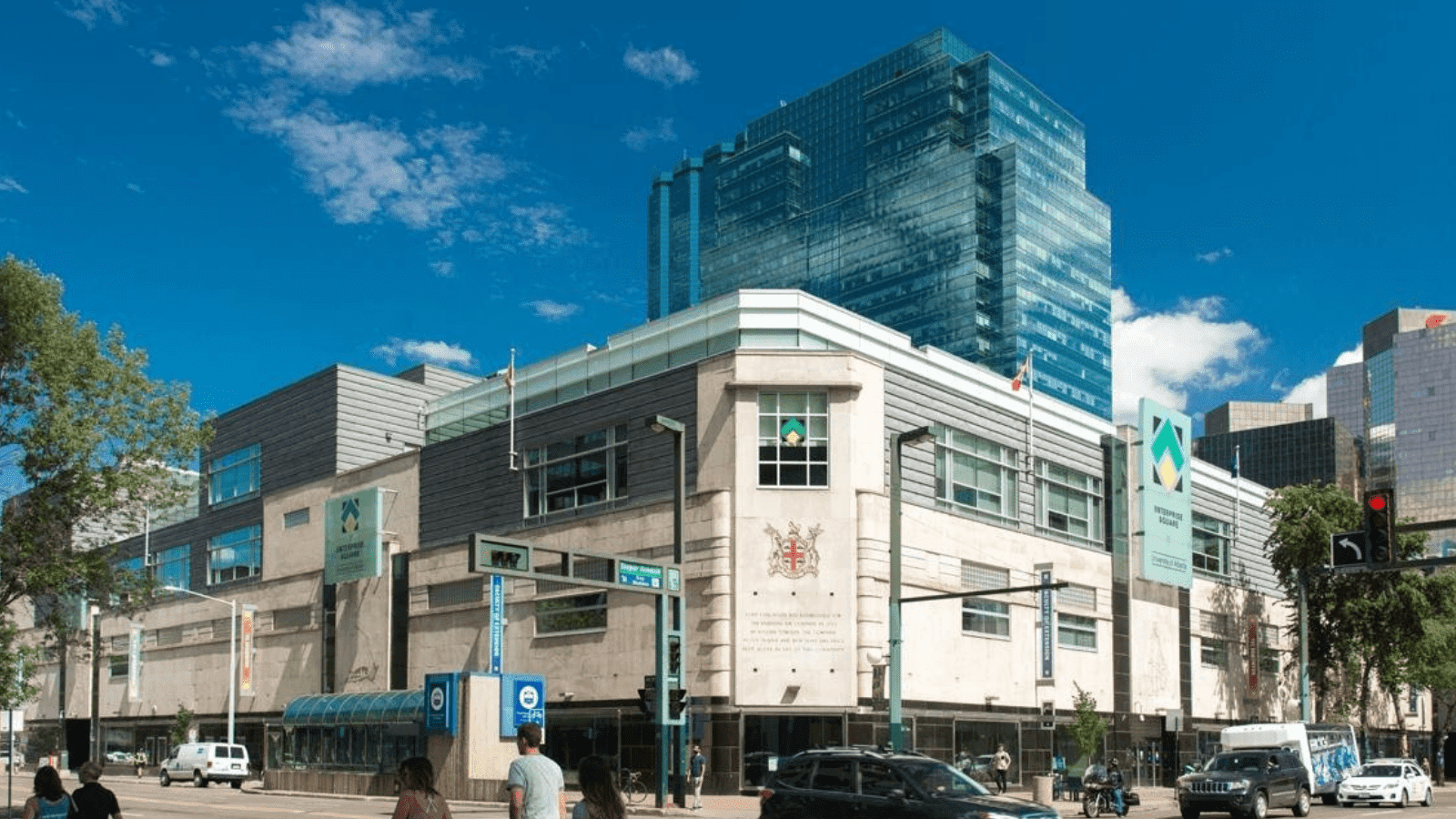
The building remained vacant until the 2000s when the University of Alberta purchased it. Vice President Carl Amrhein recalled that the university urgently needed additional space, and with construction costs skyrocketing at the time, the nearly empty department store, with its prime location and direct access to public transportation, became an ideal choice.
Thanks to government funding, restoration efforts began in 2007. The project included the addition of a fourth floor, the creation of a central 12-meter atrium, restoration of the Italian-tiled flooring, and installation of state-of-the-art video projection screens, retractable projectors, and wireless internet. By fall 2007, the building was open to students. Columnist Paula Simons described the interior, noting that its clean, structured lines harmonized beautifully with a contrasting white and deep-green color scheme.
The building’s official public reopening took place in January 2007. Today, it houses the University of Alberta’s Faculty of Extension, the Alumni Affairs office, and two branches of the School of Business.